
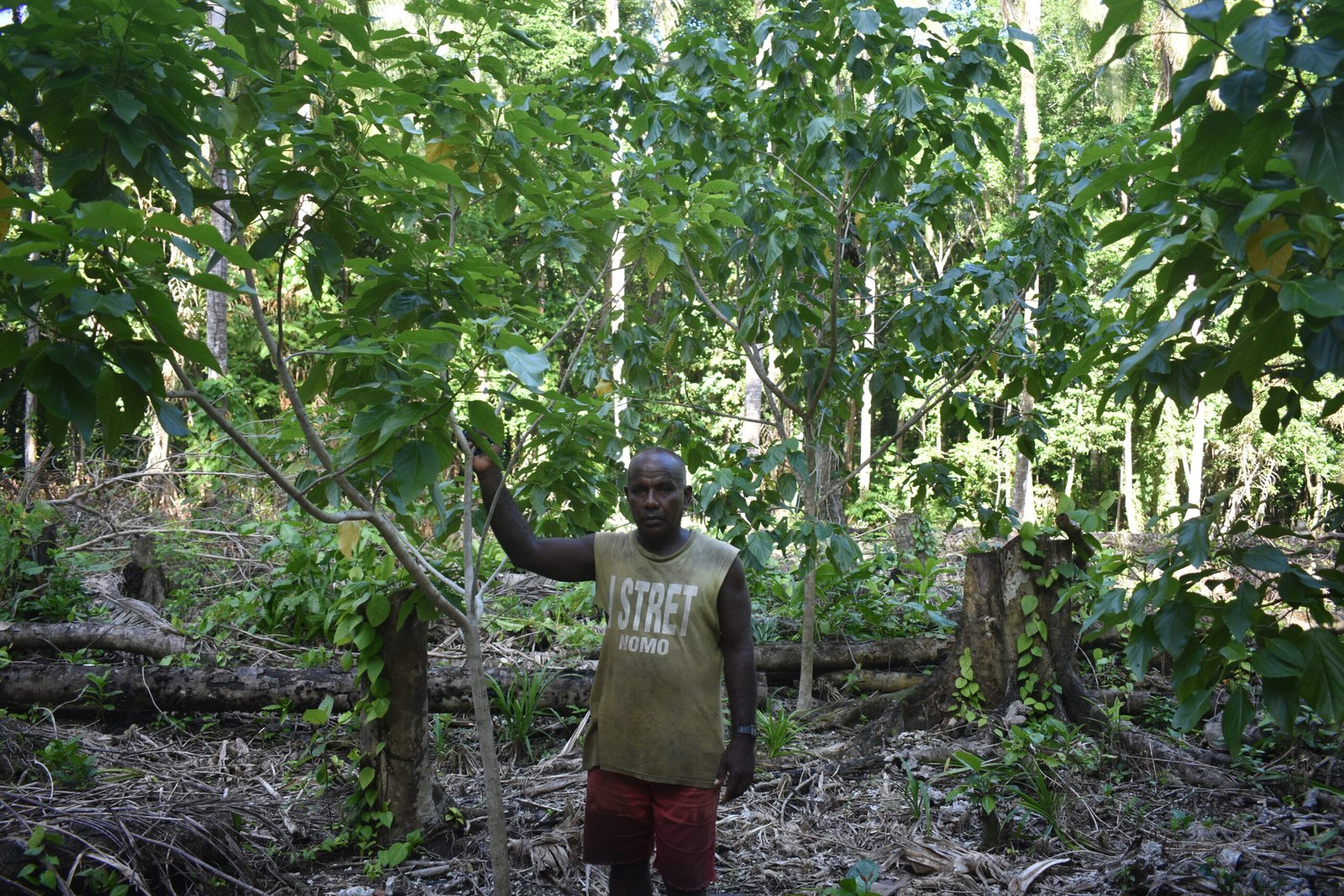
To plant at least 200 kerosene wood trees (Cordia subcordata) on the island restoring 80% of the ecosystem and biodiversity on the island.
Strategy
Planting Kerosene wood trees (Cordia subcordata) requires approaches that leverage their high tolerance for coastal and rough tropical environments.
1. Seed Propagation and Pre-Treatment
- Seed Collection: Gather mature, brown fruit pods from the ground.
- Sowing: Plant the entire pod directly into a plastic poly bag with fine soil, no deeper than three inches. Germination typically occurs within 3–6 weeks.
2. Early Growth and Nursery Care
- Nursery Period: Seedlings should remain in the nursery for 6–8 months until they reach a height of approximately 1–1.5 feet.
- Hardening: In the final 4–6 weeks before out planting, expose seedlings to full sunlight and reduce watering frequency to prepare them for field conditions.
3. Site Selection and Out planting
- Ideal Timing: The wet season is the best time for out planting to utilize natural rainfall for establishment.
- Location: Prepare a site with full sun and a neutral to alkaline pH (6.1–7.4). These trees thrive in sandy, clayey, or limestone-based coastal soils and can tolerate high salinity and strong winds.
- Spacing: Provide 10–20 feet of space between trees, as they can grow 25–40 feet tall with a wide, dense crown.
- Planting Hole: Dig a hole as wide as hands span to allow the shallow root system to spread easily.
4. Maintenance and Care
- Watering: Newly planted trees need deep watering at least once a week during the dry season. Once established, they are drought-tolerant and usually only require natural rainfall.
- Pest Monitoring: Watch for the leaf worm which can defoliate the tree.
- Bottom Clearance: Ring-around clearance of bushes of about a radius of one metre to avoid twigs and creeping plants.
Outcomes
These trees are valued for their structural and aesthetic wood properties.
1. Sustainable Energy and Fuelwood
The primary outcome of planting these trees is the production of highly efficient fuel.
- Rapid Ignition: Known as “kerosene wood” because their green branches and twigs burn readily, providing an immediate fuel source for communities.
2. High-Value Timber and Craftsmanship
Beyond fuel, these trees are valued for their structural and aesthetic wood properties.
- Durability and Resistance: The timber is often beautifully grained, glossy, and resistant to termites.
- Artisanal Use: In Solomon Islands, the wood is prized by traditional artisans for handicrafts, traditional figures, and tools.
- Construction: Larger trees provide wood for beams, posts, cabinets, and even musical instruments.
3. Ecological and Restoration Benefits
Integrating these trees into Forest Landscape Restoration initiatives provides long-term environmental outcomes.
- Erosion Control and Soil Health: Their root systems help hold soil in place, preventing erosion Some “kerosene” species can also act as nitrogen-fixing plants, improving soil fertility for surrounding crops.
- Biodiversity Support: They create habitats for birds and insects, contributing to local ecosystem restoration.
- Carbon Sequestration: Like most mature trees, they absorb and store carbon dioxide, helping to mitigate local climate impacts.